GET YOUR TICKET
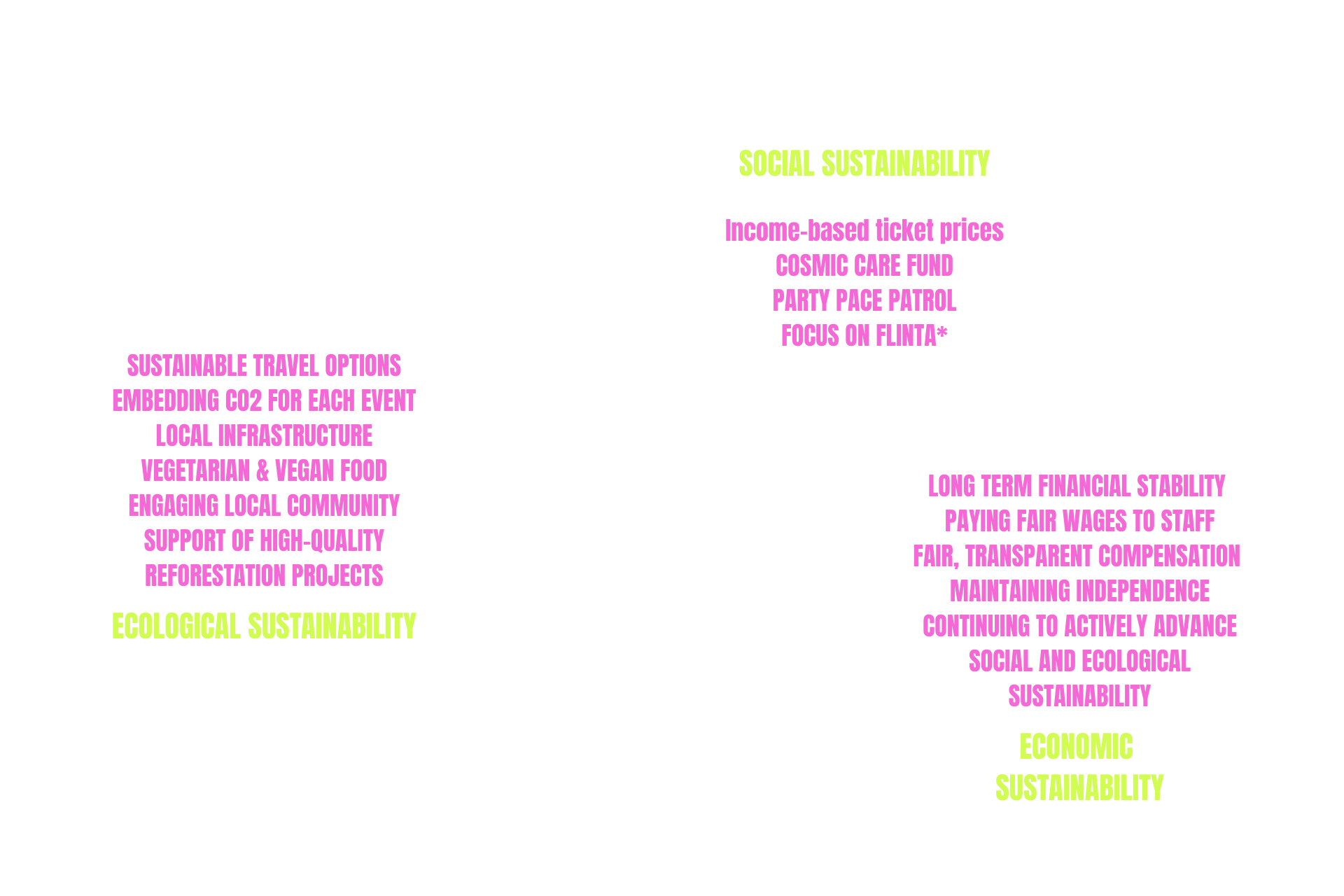
Ecological sustainability is where everything began for us, and it remains the foundation of our work. At our events, we actively reduce environmental impact by encouraging sustainable transport choices, calculating all CO₂ emissions and offsetting them transparently through donations to Prima Klima at the end of each event. We serve exclusively vegetarian and vegan food, and we work closely with local infrastructures, refugios, venues, and suppliers to keep value creation regional and transport distances short.
But ourcommitment goes far beyond individual events. Through the ORBIT360 GRAVEL SERIES alone, we have forwarded more than 65,000 EUR in participant donations to non profit climate initiatives. This represents months of work on our side without taking a single cent for ourselves. Work that flowed entirely into climate action, into reforestation, into long term ecological impact. This was not a marketing exercise or a short lived campaign. It is part of our DNA.
Social sustainability is where our community lives. It is about access, fairness, and belonging. From a financial perspective, we design our events to be as entry friendly as possible. We offer income based ticket pricing, allowing participants to choose what they can realistically afford. With our Cosmic Care Tickets, we go even further. These tickets are intentionally priced so low that we operate at a loss. We accept that loss because access matters.
We also offer a one hundred percent refund policy up to eight days before the event, removing fear and financial pressure from decision making. And with initiatives like the Party Pace Patrol, we actively support women and newcomers who want to step into the world of unsupported ultra distance events without feeling overwhelmed, isolated, or out of place. Community is not built by demanding toughness. It is built by offering support.
And then there is the third pillar.
Economic sustainability.
For ORBIT360 to exist long term, to care for its community, and to stand behind its values beyond one single edition, we need to be economically stable. That means paying fair wages to our staff. Paying fairly for creative, organizational, and emotional labor. Paying partners, contributors, and local collaborators in away that respects their work. And ensuring that the project itself survives, grows, and remains independent.
In recent times, this balance started to break. And more importantly, so did parts of our community.
A strict flight ban, while ethically consistent on paper, had real consequences. It excluded people. People who share our values. People who live far away, who make deeply sustainable choices in their daily lives, who do not own cars, who eat plant based, who live consciously, but who simply cannot reach our events without flying. Exclusion does not build community. And community is the heart of everything we do.
So we asked ourselves a difficult question. Are we protecting values, or are we protecting rules?
When we started ORBIT360, we made a very clear decision. No flights. For any of our events. Not for SNEAK PEAKS, not for GRAVITY FESTIVAL, not for TRIPPY TRAIL.
It was a strong statement, and for a while it felt like the right one.
But values are not static. They need movement, reflection, and sometimes the courage to admit that something once felt right no longer fits the reality we are operating in.
For us, sustainability has never been a single promise or a checkbox. It rests on three pillars that constantly need to be balanced: ecological sustainability, social sustainability, and economic sustainability. If one of them collapses, the whole structure becomes unstable.
The answer forced us to rethink our approach.
We decided to shift the focus back toward community, without abandoning responsibility. Flights are now allowed under clear conditions (please check our travel policy) . Emissions due to overseas travel must be compensated by donating into our sustainabilty fund to 100 % supports high-quality carbon-offset projects such as The Generation Forest. Transparency remains non negotiable. Ecological impact is not ignored, but integrated honestly into the decision making process.
This change is not a step back. It is a step sideways. Toward nuance. Toward dialogue.Toward a version of sustainability that accepts complexity instead of pretending it does not exist.
We know this decision will create friction. Some will disagree. Some will be disappointed. And that is okay. Sustainability needs debate. Community needs discourse. Progress needs uncomfortable conversations.
This policy is not perfect. But it is real. And it is open for discussion.
We invite you to question it, challenge it, and help us shape what responsible events can look like in a world that is anything but simple.
See you somewhere out there.
